Restaurant Menu PDFs: A Comprehensive Guide (Updated 05/04/2026)
Restaurant menu PDFs are digital versions of a restaurant’s offerings, easily shared online and downloaded by customers for convenient browsing and ordering.
What is a Restaurant Menu PDF?
A restaurant menu PDF is essentially a digital replica of a traditional printed menu, formatted in the Portable Document Format. This format preserves the menu’s visual layout – fonts, images, and overall design – ensuring it appears consistently across different devices and operating systems.
These PDFs are created from various sources, including software like Microsoft Word, Adobe InDesign, or dedicated online menu makers such as iMenuPro. They contain detailed listings of food and beverage items, complete with descriptions and pricing. The National Restaurant Association maintains a vast collection of these digital menus.
PDFs are favored for their accessibility and ease of sharing, allowing restaurants to showcase their offerings on websites, social media, and through email, providing customers with a convenient way to view options before dining or ordering.
Why Use PDF Format for Restaurant Menus?
PDFs offer several advantages for restaurant menus. They guarantee consistent formatting across all platforms, unlike editable documents that can appear distorted. File size reduction is possible, enabling faster downloads for online viewers.
PDFs are widely compatible, viewable on almost any device without requiring specific software. They’re ideal for online distribution – websites, social media, and email – enhancing accessibility for potential customers.
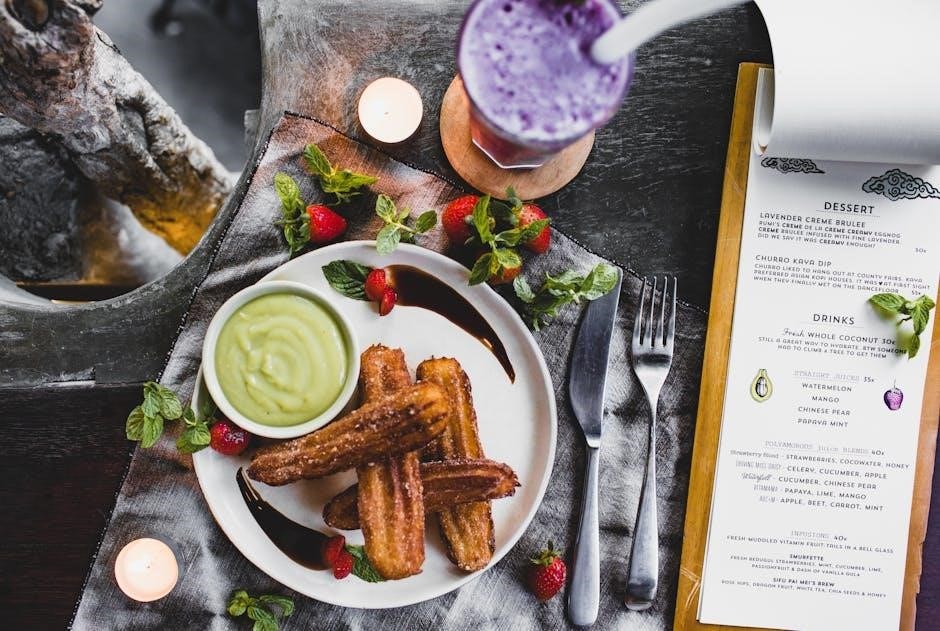
Furthermore, PDFs support high-quality images, crucial for showcasing appealing food photography. They also allow for secure distribution, preventing unauthorized alterations to pricing or menu items. Resources like pdfFiller and The Paper Mill Store highlight the benefits of using PDFs for restaurant menu presentation and printing.
Creating Restaurant Menu PDFs
Creating restaurant menu PDFs involves utilizing software like Microsoft Word, Adobe InDesign, or online menu makers such as iMenuPro to design and export menus.
Software Options for Menu Creation
Numerous software options cater to restaurant menu creation, ranging from user-friendly to professionally-focused programs. Microsoft Word offers basic design capabilities and easy PDF conversion, suitable for simpler menus. However, for more sophisticated layouts and branding, Adobe InDesign is the industry standard, providing precise control over typography and imagery.
Online menu makers, like iMenuPro, present a convenient alternative, often featuring pre-designed templates and dedicated menu-specific tools. These platforms streamline the design process and facilitate easy PDF export. iMenuPro specifically focuses on menus, offering unique features not found elsewhere. Choosing the right software depends on your design skills, budget, and the complexity of your desired menu presentation. Consider factors like ease of use, customization options, and available templates when making your selection.
Microsoft Word & PDF Conversion
Microsoft Word provides a readily accessible starting point for crafting restaurant menus, particularly for businesses with simpler design needs. Utilizing Word’s table features allows for organized presentation of menu items and pricing. While not a dedicated design program, Word offers sufficient formatting options for basic menu layouts.
Converting a Word document to PDF is straightforward, ensuring consistent formatting across different devices. This is crucial for online distribution and printing. Simply select “Save As” and choose PDF as the file type. However, complex designs may experience slight alterations during conversion. For professional-quality menus, dedicated design software is recommended, but Word remains a viable option for quick and easy menu creation and PDF generation.
Adobe InDesign for Professional Menus
Adobe InDesign stands as the industry standard for professional menu design, offering unparalleled control over layout, typography, and imagery. Unlike Word, InDesign is specifically built for page layout, enabling intricate designs and precise formatting. It excels at handling high-resolution images, vital for showcasing food attractively in your restaurant menu PDF.
InDesign’s features, like master pages and styles, streamline the design process for multi-page menus, ensuring consistency. Exporting to PDF from InDesign guarantees high-quality, print-ready files with embedded fonts and images. While requiring a steeper learning curve than Word, the investment yields visually stunning and professional restaurant menu PDFs that elevate your brand image.
Online Menu Makers & PDF Export
Online menu makers provide a user-friendly alternative to desktop publishing software for creating restaurant menu PDFs. Platforms like iMenuPro specialize in menu design, offering pre-designed templates and drag-and-drop interfaces. These tools simplify the process, even for those without graphic design experience.
Many online makers allow direct PDF export, ensuring compatibility across devices. Features often include customizable sections for appetizers, entrees, and desserts, alongside options for pricing and descriptions. Some offer features like digital ordering integration. While potentially less flexible than InDesign, they are a cost-effective and efficient solution for quickly generating professional-looking menus.

Essential Elements of a Restaurant Menu PDF
Effective restaurant menu PDFs require clear sections – appetizers, entrees, desserts – alongside accurate pricing, detailed descriptions, and vital dietary information for all patrons.
Menu Sections: Appetizers, Entrees, Desserts
Clearly defined menu sections are crucial for a user-friendly restaurant menu PDF. Begin with appetizers, enticing customers with smaller, shareable options to stimulate their appetite. Follow this with a robust entree selection, categorized by protein (beef, chicken, seafood, vegetarian) for easy navigation.
Detailed descriptions are vital here, highlighting key ingredients and preparation methods. Finally, conclude with desserts – a sweet finale that should showcase tempting options. Consider sub-categorizing within these sections (e.g., “Cold Appetizers,” “Hot Entrees”).
Logical flow and thoughtful organization enhance the dining experience, even before the food arrives. A well-structured menu PDF guides customers efficiently, increasing order accuracy and satisfaction.
Clear Pricing and Descriptions
Transparency is key when presenting pricing on your restaurant menu PDF. Prices should be prominently displayed alongside each item, avoiding ambiguity. Use a consistent currency format throughout the document. Equally important are detailed descriptions; avoid vague terms. Instead, articulate ingredients, preparation styles, and portion sizes.
Highlight any special features – “locally sourced,” “organic,” or “spicy.” Descriptions should be concise yet informative, appealing to the customer’s senses.
Avoid lengthy paragraphs; bullet points can effectively showcase key components. Accurate pricing and compelling descriptions build trust and encourage informed ordering decisions, ultimately enhancing the customer experience.
Dietary Information (Allergens, Vegan/GF Options)
Clearly indicating dietary information within your restaurant menu PDF is crucial for inclusivity and customer safety. Prominently label items containing common allergens – peanuts, shellfish, dairy, gluten, soy, etc. – using symbols or clear text. Offer dedicated sections for vegan and gluten-free (GF) options, or use distinct markings next to each suitable dish.
Consider a key explaining all symbols used. Providing detailed allergen information demonstrates care and builds trust with diners who have dietary restrictions. Accurate and accessible information prevents potential health risks and enhances the overall dining experience.
High-Quality Food Photography
Visually appealing food photography significantly enhances your restaurant menu PDF. Professional, high-resolution images showcase dishes attractively, enticing customers and increasing order potential. Avoid using stock photos; authentic images of your food are far more effective. Ensure photos are well-lit, properly composed, and accurately represent the portion sizes and presentation.
Strategic placement of images alongside corresponding menu items draws the eye and highlights signature dishes. Photography should complement, not overwhelm, the menu’s design. Consider a consistent style for all photos to maintain a cohesive and professional look.
Design Considerations for Restaurant Menu PDFs
Effective menu design balances aesthetics with functionality, utilizing fonts, colors, and layout to create a visually appealing and easy-to-navigate dining experience.
Font Choices and Readability
Selecting appropriate fonts is crucial for a positive customer experience. Prioritize readability; ornate or overly stylized fonts can hinder comprehension. Opt for clear, classic fonts like Times New Roman, Arial, or Helvetica for body text. Consider using a slightly more decorative font for headings, but maintain consistency.
Font size is equally important. Ensure text is large enough to read comfortably, especially for older customers. A minimum of 12pt font size is generally recommended. Pay attention to leading (line spacing) and kerning (space between letters) to improve readability. Avoid using too many different fonts within a single menu, as this can create a cluttered and unprofessional appearance. A maximum of two or three font families is ideal.
Color Scheme and Branding
Your menu’s color scheme should directly reflect your restaurant’s branding and overall aesthetic. Consistent branding builds recognition and reinforces your restaurant’s identity. Utilize your logo’s colors and incorporate them thoughtfully throughout the menu design. Avoid overly bright or clashing colors that can strain the eyes and detract from the food descriptions.
Consider the psychology of color; certain colors evoke specific emotions. For example, red can stimulate appetite, while blue can create a calming atmosphere. Ensure sufficient contrast between text and background colors for optimal readability. A well-chosen color palette enhances the dining experience and leaves a lasting impression on customers.
Layout and Organization
Effective menu layout guides the customer’s eye and highlights profitable items. Categorize dishes logically – appetizers, entrees, desserts – for easy navigation. Utilize clear headings and subheadings to delineate sections. Consider a grid-based layout for a clean, organized appearance. Strategic placement of high-margin items in prime viewing areas (like the upper right corner) can boost sales.
Avoid overcrowding; whitespace is crucial for readability. Use visual cues like boxes or lines to separate items. A well-organized menu minimizes decision fatigue and encourages customers to explore your offerings. Prioritize clarity over excessive design elements, ensuring a user-friendly experience.
Use of Whitespace
Whitespace, or negative space, is the empty area around text and images on your restaurant menu PDF. It’s a critical design element often underestimated. Strategic use of whitespace dramatically improves readability and prevents the menu from feeling cluttered or overwhelming. Ample spacing between menu items, sections, and margins allows the eye to rest and easily process information.
Avoid filling every inch of the page; a clean, airy design is more appealing. Whitespace draws attention to key elements, like pricing or dish descriptions. It creates a sense of sophistication and allows the food photography to stand out. Effective whitespace enhances the overall dining experience, even before the food arrives!
Optimizing Restaurant Menu PDFs
Optimizing PDFs involves reducing file size for quick downloads, ensuring accessibility for all customers, and implementing SEO strategies for improved online visibility.
File Size Reduction for Faster Downloads
Reducing PDF file size is crucial for a positive customer experience. Large files take longer to download, potentially frustrating users and impacting online ordering. Several techniques can be employed to achieve this. Compressing images within the menu is a primary method; lower resolution images, while still visually appealing, significantly decrease file size.
Furthermore, removing unnecessary elements, like embedded fonts that aren’t essential, can contribute to reduction. Utilizing PDF optimization tools, available in software like Adobe Acrobat, offers automated compression options. These tools intelligently reduce file size without drastically compromising quality. Consider saving the PDF as a “Reduced Size PDF” option when exporting. A smaller file ensures quicker access to your menu, encouraging more customers to browse and order.
PDF Accessibility for All Customers
PDF accessibility ensures everyone, including individuals with disabilities, can easily navigate and understand your restaurant menu. This involves adhering to accessibility standards, such as tagging the PDF with semantic information. Proper tagging allows screen readers to interpret the menu’s structure – headings, sections, and item descriptions – accurately;
Alternative text (alt text) for images is vital; it provides a textual description for visually impaired customers. Ensuring sufficient color contrast between text and background improves readability for those with low vision. Creating a logically ordered menu structure also aids navigation. Accessible PDFs demonstrate inclusivity and broaden your customer base, complying with legal requirements and enhancing your restaurant’s reputation.
SEO for Online Menus
Search Engine Optimization (SEO) for your restaurant menu PDF boosts online visibility. Utilize relevant keywords – like cuisine type, location, and specific dishes – within the PDF’s title, descriptions, and alt text for images. Optimize the file name with keywords before uploading (e.g., “italian-restaurant-menu-newark.pdf”).
Ensure the PDF is linked from your website’s menu page with descriptive anchor text. Submit your menu PDF to online menu platforms and local directories. Structured data markup can help search engines understand the menu content. Regularly update the PDF to maintain freshness and relevance, improving search rankings and attracting more customers seeking your culinary offerings online.
Where to Find Restaurant Menu PDF Templates
Restaurant menu PDF templates are readily available online from sources like iMenuPro, the National Restaurant Association, and sites offering free printable designs.
Free Printable Menu Templates
Numerous websites offer free, downloadable restaurant menu templates in PDF format, providing a cost-effective starting point for businesses. These templates often come in various styles, catering to different restaurant themes – from casual diners to more upscale establishments.
The Paper Mill Store provides easy-to-use, free menu templates for restaurants and bars, alongside options to order matching paper and cardstock. PDFfiller also hosts a selection of fillable food menu forms and templates. Searching online for “printable blank restaurant menu templates” yields a wealth of options.
However, remember that free templates may have limited customization options and might be used by multiple restaurants, potentially impacting branding. Carefully review licensing terms before use, and consider adapting the template to create a unique and professional look.
Premium Menu Templates (iMenuPro, etc.)
For restaurants seeking highly customizable and professional menu designs, premium template providers like iMenuPro offer robust solutions. iMenuPro specializes in menus, providing unique features not found in general design software. They boast templates like “Jango Restaurant Menu,” “Sunflower Specials,” and “Shake Chic 8×14.”
These platforms typically offer a wider range of design elements, fonts, and layout options, allowing for greater branding control. Premium templates often include features like drag-and-drop functionality and integration with online ordering systems.
While requiring a subscription or one-time purchase, the investment can yield a significantly more polished and effective menu PDF, enhancing the dining experience and potentially boosting sales. Consider the long-term benefits when evaluating the cost.
National Restaurant Association Menu Collection
Johnson & Wales University houses the National Restaurant Association Menu Collection, a valuable resource for historical and contemporary menu design inspiration. This extensive archive, donated by the NRA, provides access to a diverse range of menus from various eras and restaurant types.
Researchers and designers can explore these menus to study trends in food presentation, pricing strategies, and menu layout. The collection offers insights into the evolution of dining and the changing preferences of consumers.
While primarily a research tool, the collection can spark creative ideas for modern menu PDFs, showcasing how design elements have adapted over time. It’s a unique source for understanding menu history.

Legal Considerations for Restaurant Menu PDFs
Restaurant menu PDFs must maintain accuracy in pricing and descriptions, comply with food labeling regulations regarding allergens, and respect copyright laws for images used.
Accuracy of Pricing and Descriptions
Maintaining accurate pricing on your restaurant menu PDF is crucial for building trust with customers and avoiding legal issues. Discrepancies between the menu and the bill can lead to disputes and damage your reputation. Regularly update the PDF to reflect any price changes or item availability.
Beyond pricing, detailed and truthful descriptions are equally important. Accurately represent ingredients, preparation methods, and portion sizes. Avoid misleading language or exaggerations. Clearly indicate any potential allergens or dietary restrictions associated with each dish. Providing precise information ensures customer satisfaction and minimizes the risk of complaints or legal claims related to misrepresentation.
Regular audits of your menu PDF are recommended to verify the accuracy of all listed information.
Compliance with Food Labeling Regulations
Restaurant menu PDFs must adhere to relevant food labeling regulations, which vary by location. These regulations often mandate the disclosure of allergen information, nutritional facts, or specific ingredient listings. Failing to comply can result in fines or legal repercussions.

Specifically, clearly identify common allergens – such as peanuts, shellfish, dairy, and gluten – near the corresponding menu items. Consider using symbols or abbreviations for quick identification. Some jurisdictions require calorie counts or full nutritional information to be displayed. Ensure your PDF menu accurately reflects these requirements.
Staying updated on changing regulations is vital. Consult local health departments and legal counsel to guarantee your menu PDF remains compliant.
Copyright and Image Usage
Restaurant menu PDFs often incorporate images, requiring careful attention to copyright law. Using images without proper licensing or permission is a violation and can lead to legal issues. Always obtain licenses for stock photos or hire a photographer and secure usage rights.
If featuring photos of your dishes, ensure you own the copyright or have model releases if people are depicted. Be mindful of logos and trademarks – avoid using them without authorization. When utilizing templates, verify the licensing terms allow for commercial use and modification.
Proper attribution is crucial when required by the license. A PDF menu should respect intellectual property rights to avoid potential legal disputes.
Examples of Restaurant Menu PDFs
Restaurant menu PDFs vary greatly; examples include fast food, fine dining, and soul food establishments, showcasing diverse designs and layouts for different culinary experiences.
Fast Food Menu PDF Examples
Fast food restaurant menu PDFs typically prioritize speed and clarity. They often feature a concise layout with prominent pricing and vibrant imagery of popular items like burgers, fries, and drinks.
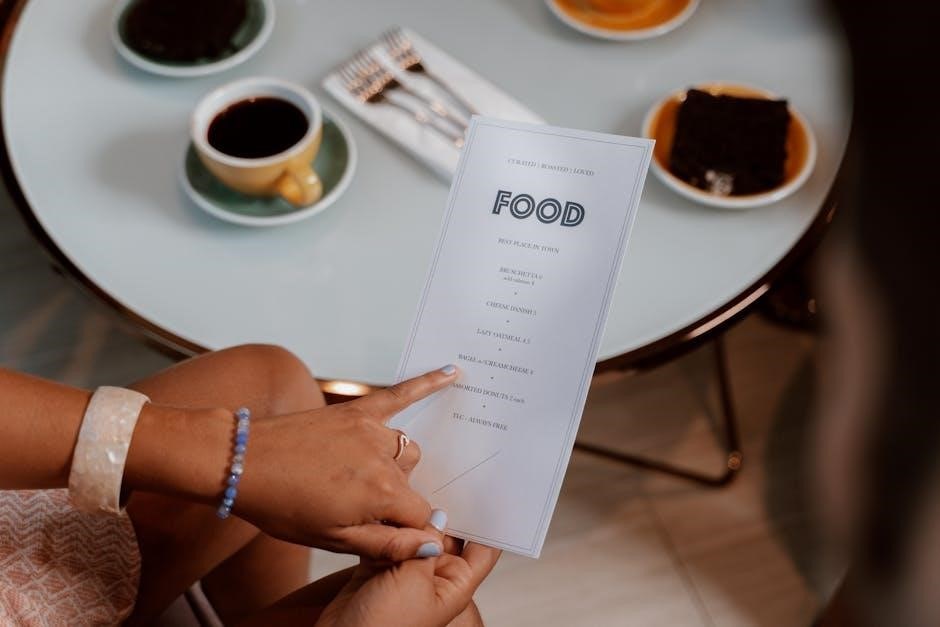
These PDFs frequently categorize offerings into sections such as “Value Meals,” “Sides,” and “Desserts,” making navigation quick and easy for customers. A two-page Oswald PDF menu exemplifies this, showcasing cold and hot drinks, salads, pastries, and sandwiches with clearly displayed prices.
The design is generally straightforward, focusing on readability and immediate recognition of menu items. Emphasis is placed on promotional offers and limited-time specials to encourage impulse purchases. File sizes are usually optimized for fast downloads, catering to on-the-go mobile users.
Fine Dining Menu PDF Examples
Fine dining restaurant menu PDFs present a markedly different aesthetic than fast food options. They emphasize elegance and sophistication, often employing a minimalist design with high-quality photography showcasing plated dishes.
These PDFs typically feature detailed descriptions of each item, highlighting ingredients, preparation methods, and potential wine pairings. Menu sections are often organized by course – Appetizers, Entrees, Desserts – with a focus on culinary artistry.
Font choices are refined and readability is paramount, though design may prioritize visual appeal over sheer speed of scanning. File sizes may be larger due to image quality, but the focus is on conveying a premium brand experience.
Soul Food Restaurant Menu PDF Examples
Soul food restaurant menu PDFs often reflect the warmth and comfort associated with the cuisine. Designs frequently incorporate vibrant colors, rustic fonts, and imagery evoking a sense of home-style cooking and Southern hospitality.
These menus typically showcase classic dishes like fried chicken, collard greens, mac and cheese, and sweet potato pie, with descriptions emphasizing traditional recipes and family heritage. Pricing is generally straightforward and accessible.
PDFs may include sections dedicated to daily specials or combo meals, appealing to value-conscious customers. While photography is common, it often prioritizes authenticity over highly stylized presentation.